
Women Hair Transplant Success Rate: Why Candidacy Matters More Than Statistics
The widely cited 90-95% success rate for hair transplants sounds reassuring—until one understands a critical truth that changes everything for women considering the procedure. That impressive statistic becomes essentially meaningless if a patient isn’t actually a good candidate for surgery in the first place.
Women now represent 15.3% of hair transplant patients, up from 12.7% in 2021—a significant 16.5% increase reflecting growing awareness and acceptance of surgical hair restoration among female patients. Yet despite this growth, women face unique challenges that men simply don’t encounter. The uncomfortable reality is that only 2-5% of women experiencing hair loss are actually good surgical candidates.
This article takes an honest approach, focusing on the candidacy factors that determine individual success rather than industry-wide statistics that may not apply to most women researching this procedure. Hair Restoration Centers, with women representing 30% of their client base and over 20 years of experience, exemplifies the transparent evaluation process that women deserve before making this significant decision.
Why General Success Rate Statistics Don’t Tell the Whole Story for Women
While graft survival rates average around 90-95% across all patients at reputable clinics using modern techniques, this figure doesn’t account for the fundamental differences in candidacy between male and female patients. The critical distinction often overlooked is that success rates measure graft survival—not whether a patient should have the procedure at all.
Women unfortunately aren’t as likely to be candidates for hair transplants as men. The primary reason involves diffuse thinning patterns that spread across the entire scalp rather than concentrating in specific areas. This pattern reduces the quality and quantity of donor hair available, and transplanted hair may continue to fall out because it lacks the same DHT resistance found in male donor hair.
For women with genetic hair loss, experts describe transplantation as “buying time rather than being a long-lasting solution”—a stark contrast to the permanent solution narrative often presented to men. Multiple factors affect female hair far more significantly than male hair: hormones, pregnancy, post-lactation complications, stress, illness, and nutrition all play substantial roles in female hair loss patterns.
The Candidacy Factor: What Actually Determines Success Rate
Candidacy stands as the single most important predictor of individual outcomes. Female pattern hair loss affects approximately 40% of women by age 50, yet the vast majority aren’t surgical candidates.
Ideal candidates exhibit predictable patterns of thinning rather than widespread, rapidly progressive loss. They possess healthy donor hair from the back and sides of the scalp—areas that must remain dense and stable to provide adequate grafts. Perhaps most importantly, hair loss must be stabilized before surgery becomes a viable option.
Success Rates by Hair Loss Type: Understanding Specific Situations
Success rates vary dramatically based on hair loss pattern, making this information critical for women assessing their own situations.
Traction Alopecia and Localized Scarring
Women with traction alopecia, scarring alopecia, or localized thinning represent the highest success rate category among female patients. These conditions respond exceptionally well to transplantation because they involve defined areas of loss surrounded by healthy donor hair. Patients in this category often achieve results comparable to male pattern baldness cases.
Common causes include tight hairstyles worn over extended periods, chemical treatments, burns, or surgical scars. The localized, stable nature of these conditions makes them ideal for surgical intervention.
Localized Pattern Thinning (Crown or Hairline)
Women experiencing thinning confined to specific areas—typically the crown or hairline—generally see good to excellent success rates. The key factors involve stable donor areas and predictable progression patterns.
Women aged 30-50 with localized thinning often experience more stable outcomes due to hormonal stability during these years. However, medical therapy remains essential to maintain results in surrounding areas that weren’t transplanted.
Diffuse Pattern Hair Loss
The difficult reality is that women with diffuse thinning across the entire scalp are often not optimal candidates. The donor area itself may be compromised, and transplanted hair may continue to fall out over time.
For this group, transplantation becomes about “buying time” rather than achieving a permanent solution. Medical stabilization before considering surgery is essential. Notably, topical minoxidil—the only medication with high-level evidence for female pattern hair loss—shows improvement in approximately 60% of patients, leaving a significant portion without effective medical options.
Unpatterned or Rapidly Progressive Loss
Patients experiencing unpredictable, rapidly progressive hair loss are generally poor candidates with uncertain outcomes. Underlying causes must be identified and addressed before any surgical intervention becomes appropriate.
Conditions that typically disqualify patients include active autoimmune disorders, uncontrolled hormonal issues, and nutritional deficiencies. Surgery performed without addressing these factors often leads to disappointing results.
The Female-Specific Candidacy Checklist
Before consultation, women can assess several key factors:
- Donor area quality: Is the back and sides of the scalp dense and healthy?
- Hair loss pattern: Is thinning localized or diffuse across the entire scalp?
- Stability: Has hair loss remained stable for at least 12 months?
- Medical management: Have non-surgical treatments been tried and optimized?
- Age considerations: Women between 30-50 often experience better outcomes
- Underlying conditions: Have hormonal issues, nutritional deficiencies, or medical conditions been addressed?
- Realistic expectations: Is there understanding of density limitations and potential need for multiple procedures?
Why Women Face Different Challenges Than Men in Hair Transplantation
Biological differences create fundamentally different scenarios for women. Female hair loss patterns are less predictable and more influenced by systemic factors that can change over time. Women’s donor hair may not possess the same permanent characteristics as men’s DHT-resistant follicles.
The psychological impact compounds these challenges significantly. Research indicates that 81% of women state their hair determines their confidence level, creating vulnerability to predatory marketing that exploits emotional distress.
In 2021, 83% of female hair transplant patients sought scalp hair replacement, with eyebrow transplants being the second most popular procedure at 11%. Technique considerations also differ—FUT remains popular for women, contributing 30% of procedures in 2024, partly because longer hair can more easily conceal linear scarring.
The Importance of Medical Therapy Before and After Transplantation
Surgery alone rarely provides a complete solution for women with pattern hair loss. Topical minoxidil remains the foundation of treatment, though approximately 40% of patients don’t show improvement with this medication.
Anti-androgen therapy such as spironolactone may benefit appropriate candidates. Critically, transplantation without ongoing medical management often leads to continued loss in non-transplanted areas, creating an unnatural appearance over time.
Managing expectations about long-term maintenance is essential—most women will require ongoing treatment to preserve results.
Red Flags: When Clinics Prioritize Profit Over Candidacy
The rise in predatory clinics exploiting women’s emotional vulnerability around hair loss demands attention. Warning signs include:
- Clinics guaranteeing success rates without thorough evaluation
- Being deemed a candidate without comprehensive medical history and scalp analysis
- Heavy emphasis on before/after photos without discussing candidacy criteria
- Lack of conversation about medical management requirements
Finding surgeons with specific female hair transplant experience—rather than general practitioners who primarily treat men—significantly impacts outcomes. Transparent evaluation processes that may conclude a patient isn’t a good candidate actually demonstrate integrity.
What to Expect from a Proper Female Hair Transplant Evaluation
Reputable clinics conduct comprehensive evaluations including:
- Medical history review: Hormonal status, medications, previous treatments, family history
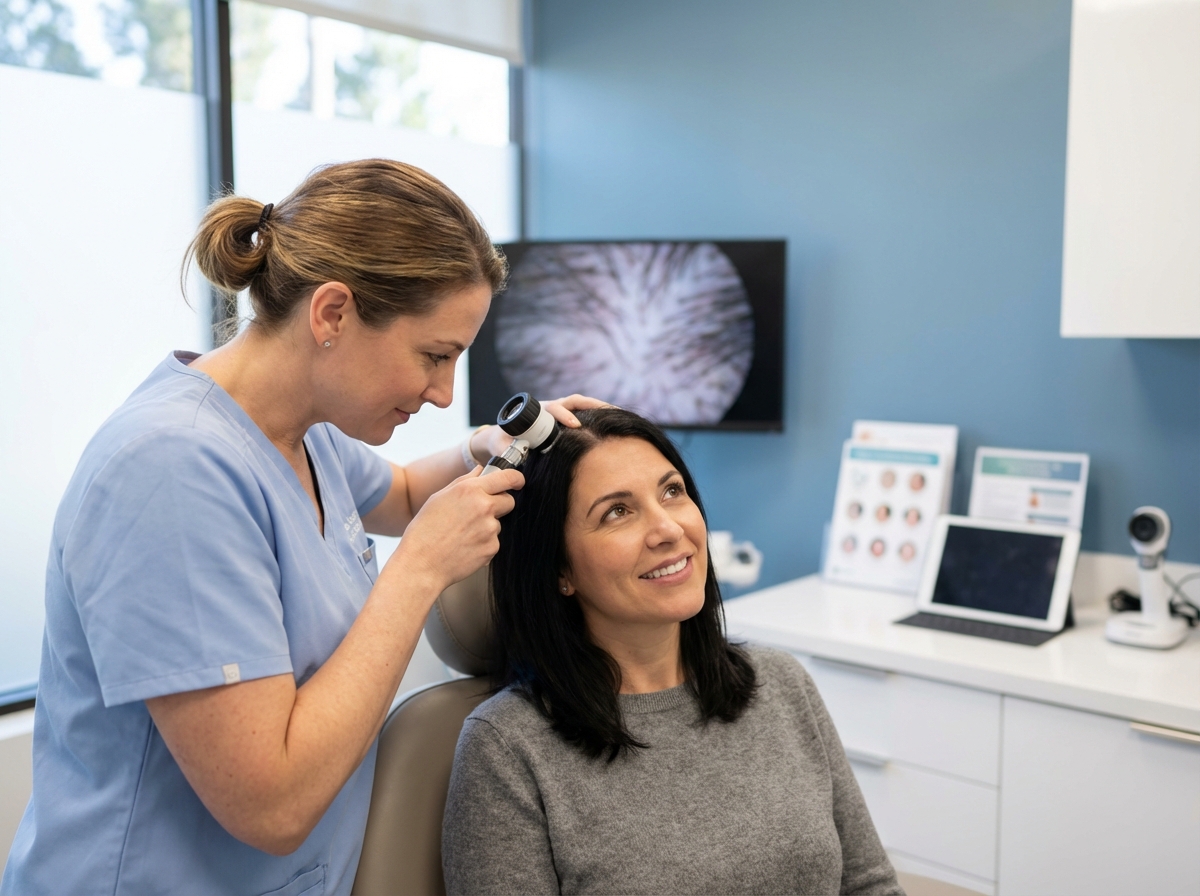
- Scalp analysis: Donor area quality, hair loss pattern classification, miniaturization assessment
- Realistic outcome discussion: Based on specific individual factors
- Treatment planning: Which may include medical therapy before or instead of surgery
- Honest assessment: Including the possibility of being advised against surgery
Hair Restoration Centers employs a three-step process: photo evaluation, patient advisor consultation within 24 hours, and surgeon review—ensuring thorough assessment before any procedure is scheduled.
Setting Realistic Expectations: What Success Actually Looks Like for Women
Success extends beyond graft survival rates to functional and aesthetic outcomes. Transplants create coverage, not necessarily the density of youth. Full results develop over 1.5-2 years, with an initial shedding phase that can concern patients who aren’t prepared.
Some patients require multiple procedures to achieve desired density. Ongoing maintenance—including medical therapy and potential touch-up procedures—remains part of the long-term picture. The most popular age group for female hair transplants is 40-49, representing 28% of female patients, and success stories from this demographic demonstrate achievable outcomes.
Making an Informed Decision: Next Steps
Consultation with experienced female hair transplant specialists provides essential clarity. Women with diffuse thinning should consider obtaining multiple opinions before proceeding.
Documenting hair loss patterns over 6-12 months before making decisions helps establish stability. Optimizing medical treatments first allows for reassessing surgical candidacy from a stronger position.
Hair Restoration Centers operates 27 locations nationwide with board-certified surgeons and over 20 years of experience. Their 30% female client base indicates specialized expertise with women’s unique needs and challenges.
Conclusion
Individual candidacy matters infinitely more than general statistics. While overall success rates exceed 90%, this figure becomes meaningless without proper candidate selection. The honest answer of “you’re not a good candidate” sometimes represents the most valuable outcome of a consultation.
Female pattern hair loss affects 40% of women by age 50, yet only a small fraction are good surgical candidates. Non-surgical options remain the treatment foundation for most women experiencing hair loss. Proper candidacy assessment represents medical integrity—not a barrier to treatment.
Take the First Step Toward Clarity
Women seeking honest answers about their candidacy can schedule a comprehensive evaluation at Hair Restoration Centers. The free consultation emphasizes transparent assessment over sales pressure.
The three-step process—submitting photos, speaking with a patient advisor within 24 hours, and surgeon review—provides thorough evaluation before any commitment. With expertise serving over 100,000 patients and a significant female client base, the consultation offers an educational opportunity to understand individual candidacy rather than generic statistics.
Contact Hair Restoration Centers at (855) 976-3638 or visit affordablehairtransplants.com to discover whether hair transplant surgery is an appropriate option—or to learn which alternative approaches might better serve specific needs.