
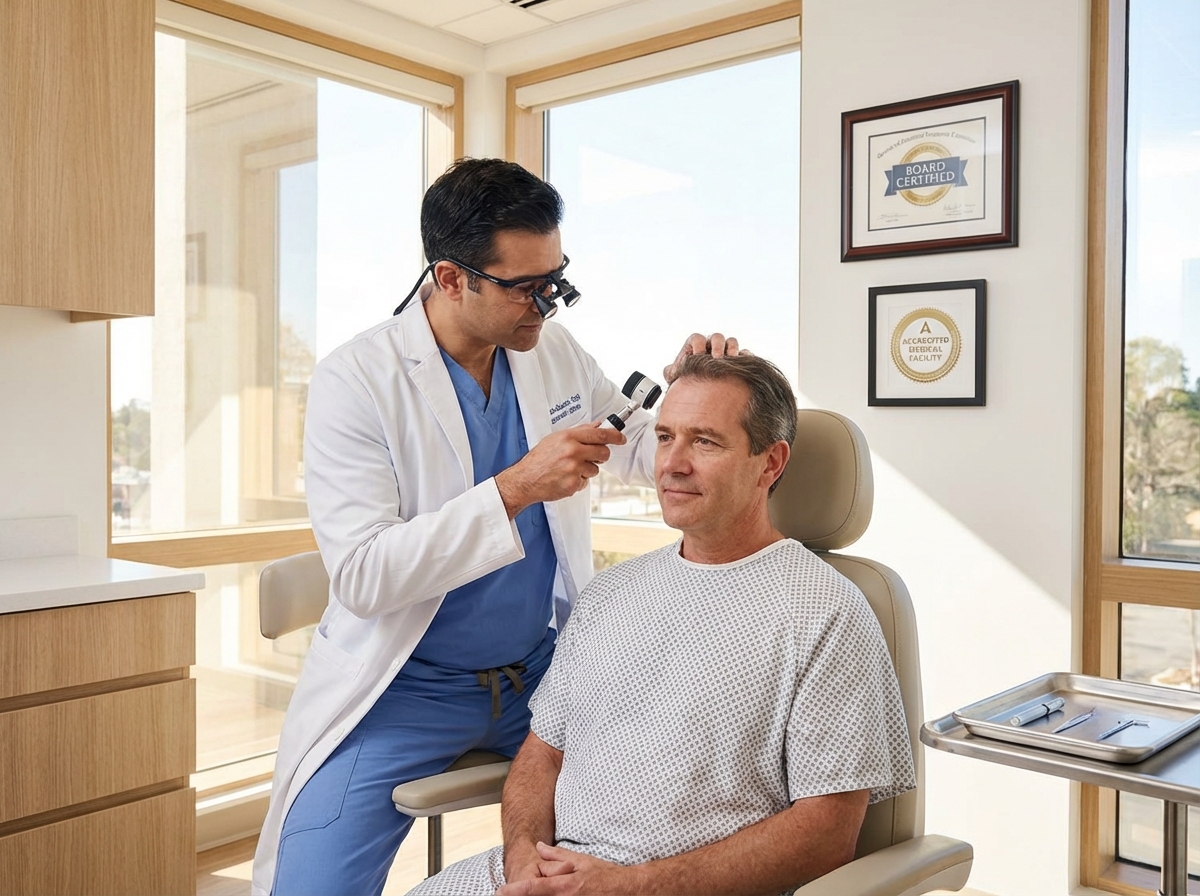
Hair Transplant Safety Concerns: What U.S. Standards Mean for Your Procedure
Researching hair transplant surgery inevitably leads to safety questions. Prospective patients encounter stories of botched procedures, infection risks, and complications that can understandably create anxiety. These concerns are valid and deserve thorough investigation rather than dismissal.
This article provides the knowledge necessary to evaluate any provider’s safety standards with confidence. Rather than creating fear, the goal is empowerment through understanding the multi-layered safety infrastructure that exists in the United States and how it compares to international medical tourism destinations. Armed with the right criteria, informed patients can make decisions based on verifiable facts rather than marketing claims.
Understanding Hair Transplant Safety: The Real Numbers
Evidence-based data paints a reassuring picture when procedures are performed correctly. According to peer-reviewed research published by the National Institutes of Health, infection rates after hair transplant occur in less than 1% of properly performed procedures. A 2025 scoping review reported overall complication rates of 1.2-4.7% in experienced hands, with serious complications being rare.
Hair transplant success rates when performed by qualified surgeons typically range from 90-98% according to recent clinical data. These outcomes depend heavily on surgeon qualification and facility standards rather than inherent risks of the procedure itself.
Common temporary side effects include:
- Swelling around the forehead and eyes
- Temporary numbness in donor and recipient areas
- Shock loss (temporary shedding)
- Folliculitis (inflammation of hair follicles)
Rare serious complications include:
- Septicemia (blood infection)
- Skin necrosis
- Arteriovenous fistula
- Permanent scarring from overharvesting
The critical distinction lies in understanding that safety outcomes correlate directly with who performs the procedure and where it takes place.
The U.S. Safety Infrastructure: Multiple Layers of Protection
The United States maintains a multi-layered regulatory system designed to protect patients undergoing medical procedures. These layers work together to create accountability, establish minimum standards, and provide recourse when problems occur. Understanding each component helps patients evaluate any provider’s commitment to safety.
FDA Oversight and Medical Device Regulation
The Food and Drug Administration regulates surgical instruments, anesthetics, and medical devices used in hair transplantation. FDA approval processes ensure equipment meets established safety standards before reaching patients. This oversight extends to monitoring adverse events and initiating product recalls when safety concerns emerge.
Medical tourism destinations often lack equivalent regulatory bodies, meaning equipment quality and safety cannot be verified through independent government oversight.
State Medical Board Licensing and Oversight
U.S. physicians must maintain active state medical licenses with continuing education requirements. State medical boards investigate complaints and can take disciplinary actions including license suspension or revocation. While any licensed physician can legally perform hair transplants regardless of specialized training, these boards provide accountability mechanisms unavailable in many international destinations.
Patients should verify their surgeon’s license status through their state medical board and check for any disciplinary history. Regulatory oversight in popular medical tourism destinations may be minimal or unenforced, leaving patients with limited recourse.
Accredited Surgical Facility Standards
Facility accreditation through organizations like AAAHC (Accreditation Association for Ambulatory Health Care) or the Joint Commission indicates compliance with rigorous safety standards. Accredited facilities must maintain infection control protocols, emergency equipment, and staff training requirements.
Verification of accreditation status through official databases should be part of every patient’s evaluation process.
Malpractice Insurance and Legal Recourse
U.S. physicians typically carry malpractice insurance, providing financial protection for patients if complications occur due to negligence. The legal system offers recourse through malpractice claims that can cover medical expenses, lost wages, and damages.
Pursuing legal action against international providers presents significant challenges including jurisdictional issues, communication barriers, and the practical impossibility of enforcing foreign judgments. This malpractice system creates financial incentives for U.S. providers to maintain quality care and safety protocols.
What Board Certification Really Means (And What It Doesn’t)
Understanding board certification prevents patients from being misled by vague credential claims. There is no ABMS (American Board of Medical Specialties) recognized board certification specifically for hair transplants. Relevant board certifications include dermatology, plastic surgery, and facial plastic surgery.
The American Board of Hair Restoration Surgery (ABHRS) offers Diplomate certification specifically for hair transplant surgeons. This credential requires passing comprehensive examinations and demonstrating surgical competence. However, only approximately 270 hair surgeons worldwide have achieved ABHRS Diplomate status as of recent data.
Red flags to watch for:
- Claims of being “board certified” without specifying which board
- Credentials from unrecognized certification bodies
- Reluctance to provide verifiable credential information
U.S. residency training requires 3-5 years of intensive medical education, compared to as little as 6-9 months in some international destinations. This training difference significantly impacts diagnostic ability, surgical skill, and complication management.
The Medical Tourism Safety Gap: What’s Missing Abroad
The scale of medical tourism for hair transplants is substantial. Turkey performed over 1 million procedures in 2021, generating approximately $2 billion annually. A 2025 systematic review describes this industry as operating in a “permissive regulatory environment, lacking standardization, oversight, and consistent reporting, creating a data black hole.”
Specific concerns include:
- Unlicensed technicians performing surgery: Reports indicate taxi drivers and refugees have conducted procedures in some locations
- Bait and switch practices: Doctors consult with patients but technicians perform the actual surgery
- Robotic devices enabling non-physician procedures: Technology that allows technicians to perform extractions without physician involvement
- Black market clinics: Operating outside any regulatory framework
The International Society of Hair Restoration Surgery (ISHRS) has issued warnings about these practices. World Hair Transplant Repair Day on November 11th highlights the epidemic of botched procedures requiring correction.
Average U.S. hair transplant costs range from $8,000-$30,000 compared to $2,000-$5,000 in Turkey. This price difference often reflects reduced physician involvement, lower facility standards, and minimal regulatory compliance rather than equivalent care at lower cost.
Critical Safety Concerns: Donor Site Overharvesting and High-Volume Mills
Donor site overharvesting represents one of the most serious complications because it causes permanent damage. Aggressive harvesting leads to visible thinning in the donor area and limits options for future procedures. This issue is particularly common in high-volume “hair mill” clinics that prioritize quantity over individualized care.
Proper donor management requires physician expertise in assessing each patient’s lifetime donor supply. Rushed procedures and technician-heavy operations increase the risk of overharvesting. Repair procedures for this complication are limited and often produce unsatisfactory results.
How to Verify Any Provider’s Safety Standards: Your Evaluation Checklist
Regardless of location, patients should verify the following before proceeding:
Credential Verification:
- Check state medical board license status and disciplinary history
- Verify ABHRS Diplomate certification through the official ABHRS website
- Confirm specialty board certifications through ABMS
Facility Verification:
- Request accreditation documentation
- Verify accreditation status through official databases
- Ask about emergency protocols and equipment
Consultation Questions:
- Who performs each step of the surgical procedure?
- What is the surgeon’s personal complication rate?
- How many procedures does the surgeon personally perform annually?
- What happens if complications arise after returning home?
Red Flags:
- Prices significantly below market average
- Unwillingness to provide verifiable credentials
- Vague answers about who performs surgery
- High-pressure sales tactics
- Promises of “scarless” procedures
Understanding Your Recourse: What Happens If Complications Occur
For U.S. procedures, patients can file complaints through state medical boards, which investigate and can take disciplinary action. Malpractice claims provide financial recourse for negligence-related complications.
Complications from international procedures present significant challenges:
- Travel costs for follow-up care
- Communication and language barriers
- Legal jurisdiction issues making lawsuits impractical
- No guarantee the original surgeon will be available
Most serious complications require immediate local medical attention, creating geographic dependency on accessible care. Ongoing access to the operating surgeon for post-operative monitoring represents a significant advantage of domestic procedures.
Making an Informed Safety Decision
Qualified surgeons exist internationally, but verification is substantially more challenging. The evaluation framework presented here applies regardless of provider location. Total cost calculations should include potential revision surgery, travel for complications, and legal recourse limitations.
The lowest complication rates correlate with surgeon experience, proper facility standards, and regulatory accountability. These factors matter more than geography alone, but the U.S. safety infrastructure makes verification and recourse significantly more straightforward.
Conclusion
Hair transplant safety concerns deserve thorough investigation. The U.S. regulatory infrastructure provides multiple protection layers: FDA oversight, state medical boards, facility accreditation, and malpractice systems. Understanding what board certification actually means—and how to choose the right hair transplant surgeon—transforms anxiety into informed decision-making.
The 90-98% success rates documented in clinical research are achievable when procedures are performed by qualified surgeons in properly accredited facilities. Safety verification should be the essential first step before considering cost or convenience factors.
Take the Next Step with Verified Safety Standards
Hair Restoration Centers operates 27 locations throughout the United States, staffed by board-certified surgeons working within the multi-layered safety infrastructure described in this article. With over 20 years of experience and more than 100,000 patients served, the organization provides an opportunity to apply the evaluation criteria learned here.
Free consultations allow prospective patients to verify credentials, ask detailed questions about facility standards, and understand exactly who performs each step of the procedure. Patient advisors can address specific safety questions and provide documentation of surgeon qualifications and facility accreditation.
To schedule a consultation and begin the verification process, contact Hair Restoration Centers at (855) 976-3638. Request detailed information about surgeon credentials, facility accreditation status, and safety protocols. An informed patient is a protected patient.